Condividere
Stampa


Non disponibile in CHF
Mostra prezzo in
Architonic ID: 1013983
SKU: 412 365 00
Anno di Lancio: 1958
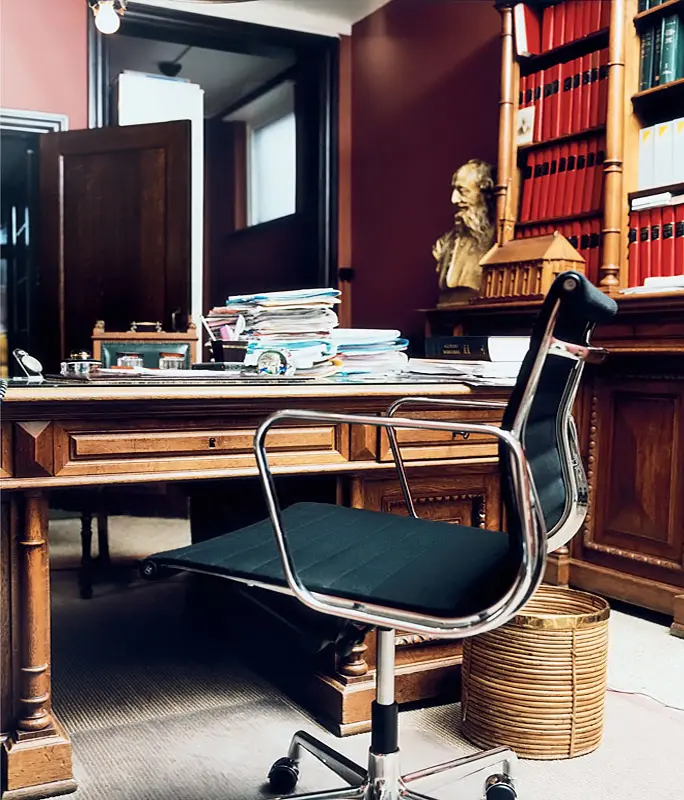
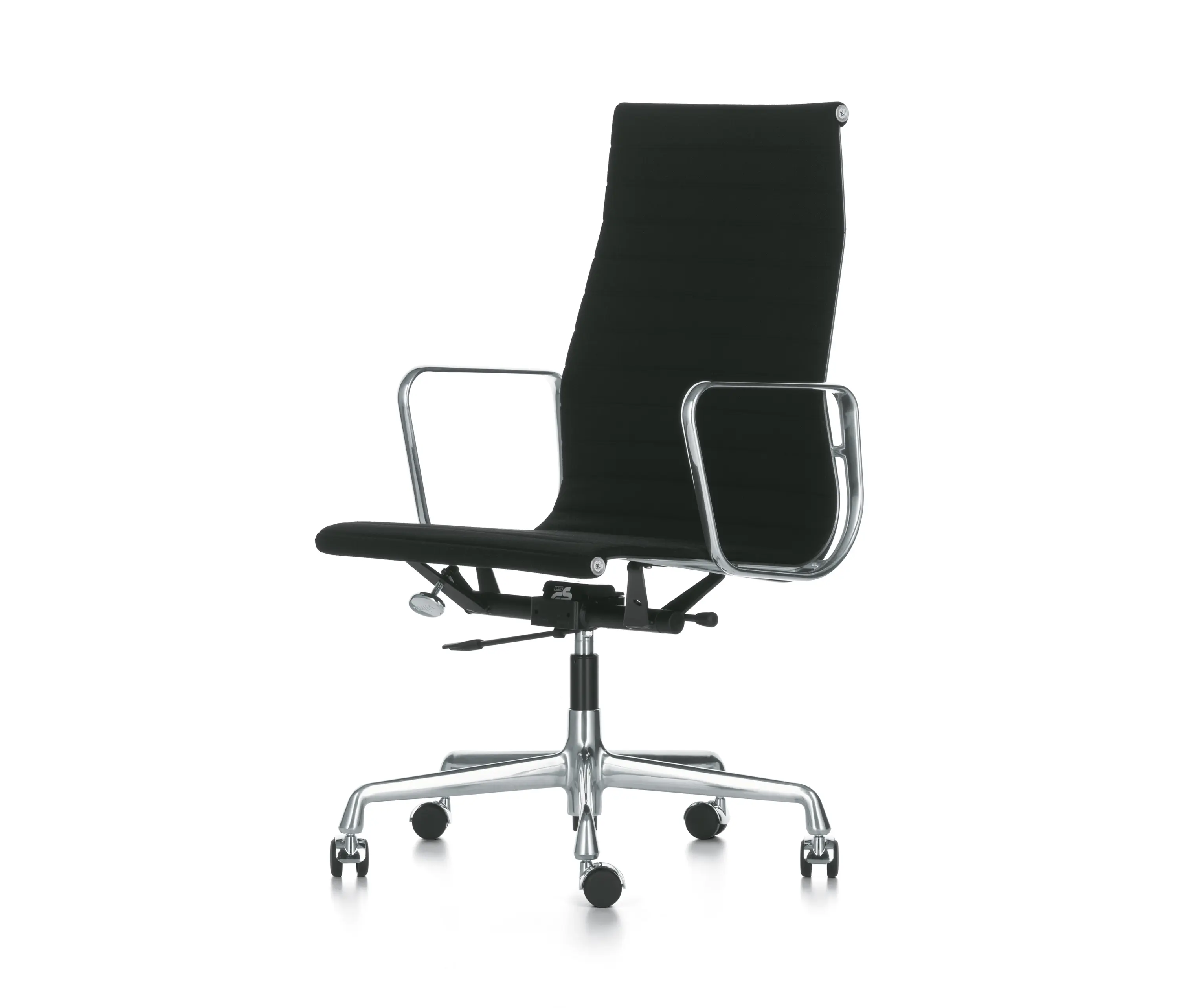
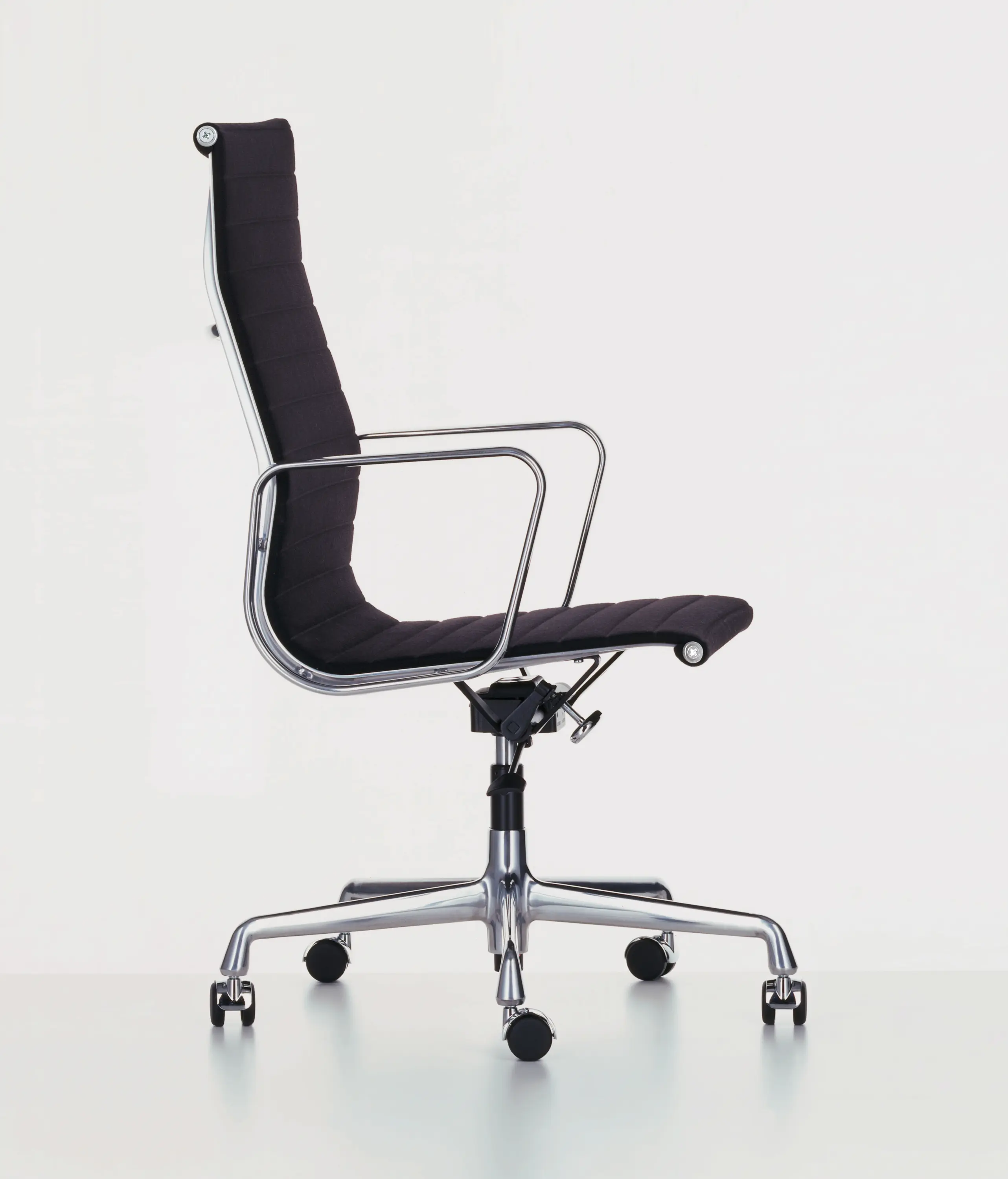
EA 119, schienale alto
1015-1135 × 580 × 585-725 / 392-508 mm
Concetto
La Aluminium Chair è uno dei più straordinari elementi d‘arredo di design del XX secolo. Charles e Ray Eames l‘hanno progettata originariamente nel 1958 per la residenza privata di un collezionista d‘arte di Columbus nell‘Indiana (USA). Per la progettazione di questa sedia la coppia di designer ha abbandonato il principio della seduta a guscio, tendendo invece un pannello di tessuto o di pelle tra due elementi laterali in alluminio per creare una seduta tesa ma elastica. La sedia si adatta al corpo della persona ed è molto comoda, anche in assenza di un‘imbottitura complessa.
L‘Aluminium Group comprende diversi modelli adatti all‘utilizzo in ambienti domestici, uffici e aree pubbliche. Vitra produce la serie di sedute Aluminium Group da diversi decenni, sempre nella stessa eccellente qualità. Questa esperienza ci consente di offrire una garanzia di 30 anni su tutti i modelli di sedie dell‘Aluminium Group.
I modelli a base girevole EA 117, EA 118 ed EA 119 – le sedie da lavoro dell'Aluminium Group di Charles e Ray Eames – aggiungono una presenza iconica agli ambienti per ufficio prestigiosi. Sono dotati di un meccanismo di inclinazione regolabile in base al peso dell'utente per garantire un comfort ottimale. Grazie all'ampia selezione di colori dei rivestimenti, trovare la sedia ideale per qualsiasi ambiente di ufficio è semplicissimo. I modelli EA 117 ed EA 118 si distinguono dal modello EA 119 per i loro schienali più bassi. Il modello EA 118 presenta un sedile leggermente più stretto e la posizione di seduta di questo modello è più specificamente adatta ad attività da scrivania.
Schienale e sedile: EA 117 con schienale di media altezza; EA 118 con schienale di media altezza e posizione da scrivania; EA 119 con schienale alto. Nervature orizzontali saldate ad alta frequenza in tessuto o pelle. Profili laterali e distanziatori in alluminio pressofuso con finitura lucida o cromata o verniciati a polvere in nero intenso.
Meccanismo di seduta: inclinazione regolabile all'indietro, bloccabile in posizione inclinata in avanti. Altezza della seduta regolabile in modo continuo tramite pompa a gas.
Braccioli: alluminio pressofuso con finitura lucida o cromata o verniciati a polvere in nero intenso.
Basamento: base a cinque razze in alluminio pressofuso con finitura lucida o cromata o verniciato a polvere in nero intenso. Dotato di rotelle rigide per moquette e rotelle morbide per pavimenti rigidi. Copri-ruote in colore nero per basamento lucido e basamento nero, con finitura cromata per basamento cromato.
Questo prodotto appartiene alla collezione:
Alluminio, Base metallo, Cuoio, Metallo, Seduta cuoio

Hopsak
Material Type:
Fabric
Hopsak
Details
Material Attributes, Available Colors

Rete
Material Type:
Fabric
Rete
Details
Material Attributes, Available Colors

Certificate 9843 GG Eames Aluminium Group

United States
Charles and Ray Eames are two of the most important product designers of the 20th century. The celebrated duo experimented with plywood, fibreglass, steel wire and aluminium, creating some of the most popular mid-century classics, including the Lounge Chair and Ottoman, the Aluminium Group chairs, and the DSW Chair. Charles & Ray Eames: a biography Charles Eames was born in 1907 in St. Louis, USA, and studied architecture at the Washington University in St. Louis. In 1938, he continued his studies at the Cranbrook Academy of Art in Michigan. He later became the head of the Design Department. Beatrice Alexandra (Ray) Kaiser was born in 1912 in Sacramento, California. She studied painting at Bennett College in New York before she met Charles Eames at the Cranbrook Academy. They married in 1941. As designers, Ray and Charles Eames experimented with moulded plywood, and together with Finnish architect Eero Saarinen, they won the “Organic Design in Home Furnishings” competition in 1940. In 1946, the duo's work was exhibited at the Museum of Modern Art (MoMA) in New York. In addition to their prodigious furniture output, the pair had also designed the IBM-Pavilion at the 1964 New York World's Fair. In 1969, they participated at the Musée des Arts Decoratifs exhibition “Qu'est-ce que le design?” and MoMA presented a retrospective of their work in 1973, entitled “Furniture by Charles and Ray Eames.” Charles Eames died in 1978, while Ray Eames died in 1988. The Work of Charles & Ray Eames The duo's early work is associated with the moulded plywood technique pioneered by Alvar Aalto. In 1956, they designed the famous Lounge Chair and Ottoman – a contemporary version of a club chair. The seat offers unparalleled comfort and quality, combined with luxurious materials such as rosewood and leather. In 1958, the designers followed up with the Aluminium Group, a series of chair designs using cast aluminium and a wide variety of canvas and leather seats, available in different colours. The chairs were easily adaptable to both office and home environments. Charles and Ray Eames also worked extensively with steel wire, as well as fibreglass and plastic. Eames House The Eames House was built as the couple's house and studio in 1949 in the Pacific Palisades neighbourhood of Los Angeles. Built as a part of the Case Study Houses Program initiated by Arts & Architecture magazine, it is sometimes known as Case Study House Nr. 8. The architecture of the Eames House serves as a frame for an ever-changing mix-and-match interior, in which Eames furniture was often paired with exotic and primitive objects. Eames Chair The Eames Chair combines comfort with high design, and the multitude of available seats, bases and colours enables combinations such as Plastic Side Chair and Eames Armchair and Eames Rocking Chair. The chairs were originally made from fibreglass, but are now produced from moulded plastic (polypropylene) by the manufacturer Vitra. Eames Hang it all Originally designed as a children's wardrobe, Hang it all is made of white steel wire and colourful wooden spheres. A modular design, it can be repeated almost endlessly without losing the compositional harmony of the original unit. Plywood Group The concept behind the Plywood Group furniture series was that three-dimensionally moulded plywood could be designed to fit human anatomy. Additionally, plywood furniture is light and durable, if treated correctly. The LCW Eames Chair optimises the support for the seat and the backrest by fastening the components to the steel frame with rubber screws, an innovation pioneered by Charles and Ray Eames. © by Architonic


