Condividere
Stampa


Architonic ID: 1439165
Anno di Lancio: 1952
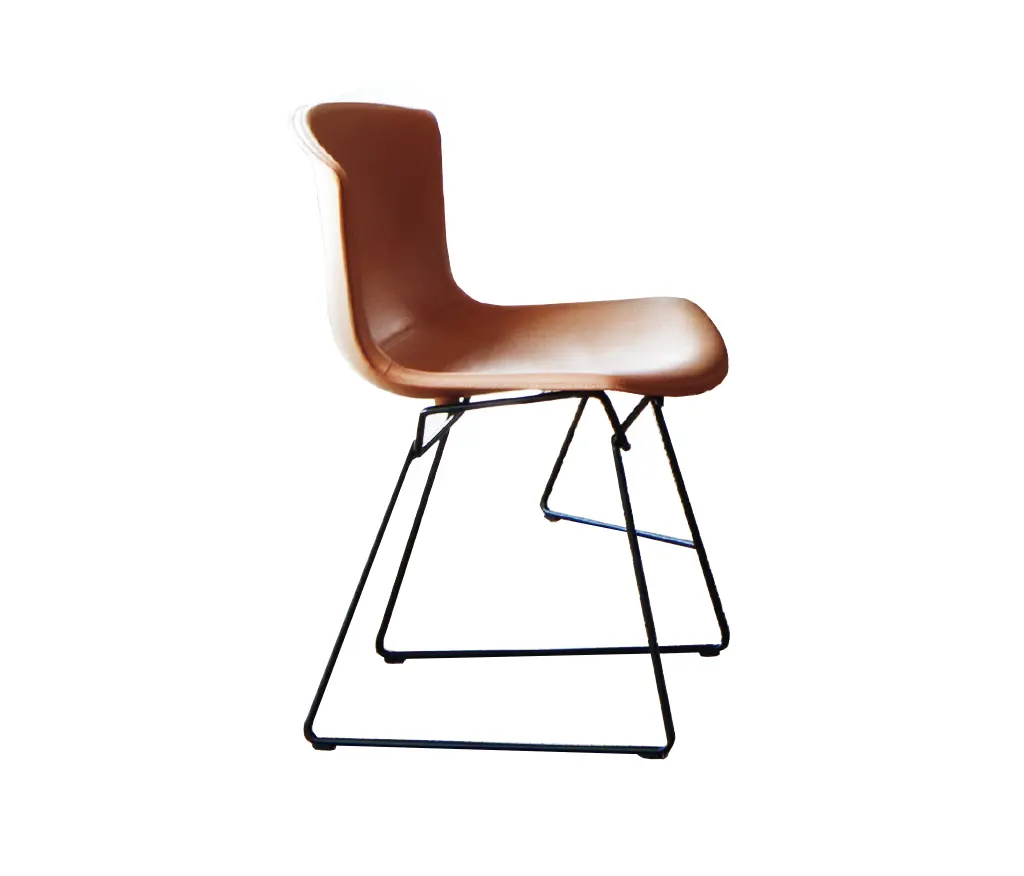
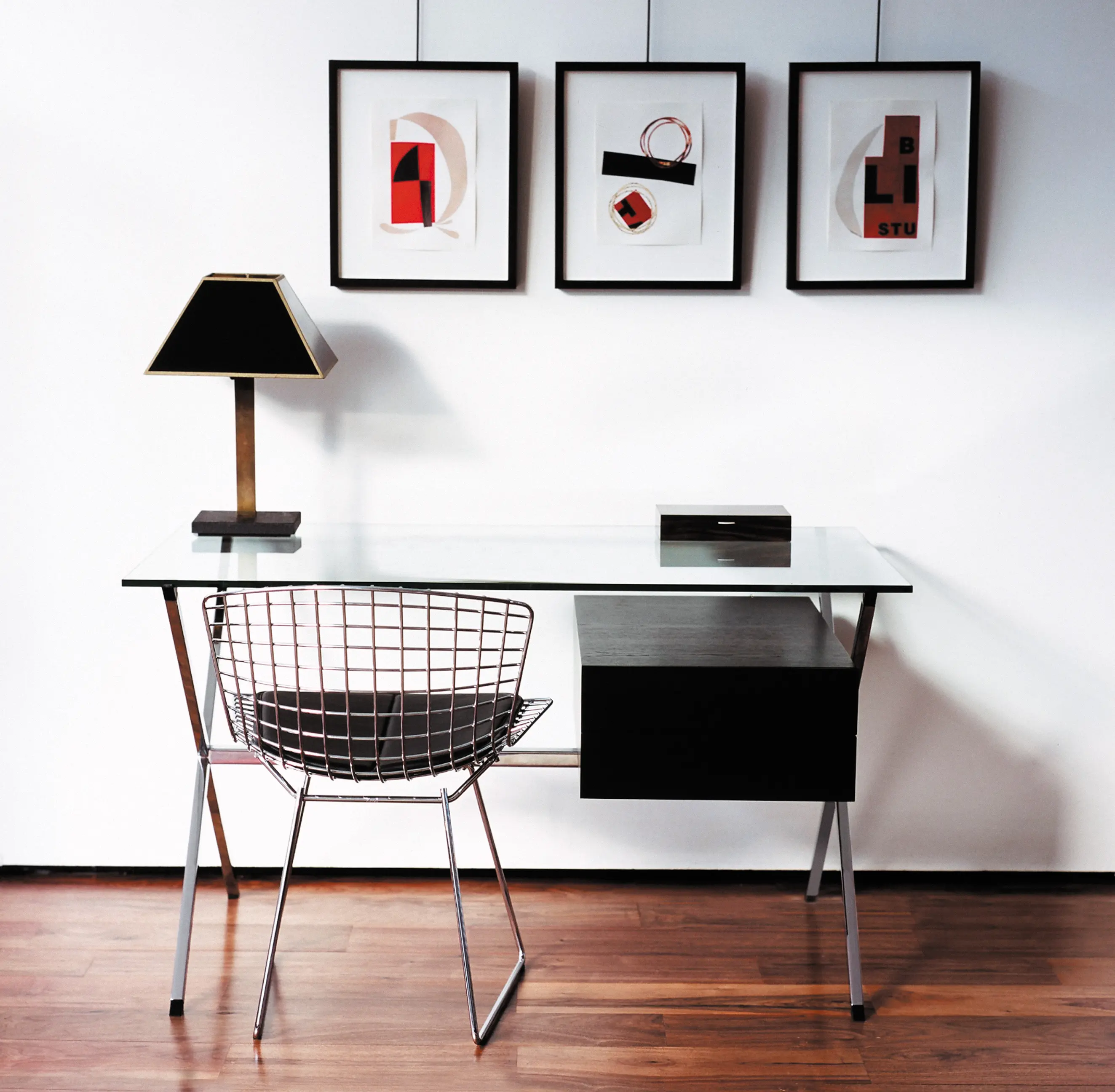
Struttura: in tondino d’acciaio saldato con finitura cromata o verniciata nera, bianca o bronzo. Pattini in plastica.
Scocca: in polipropilene completamente rivestita in cuoio in tre colori.
Dimensioni: 54 cm L, 58 cm P, 73 cm H
Concetto
Italiano di nascita, scultore, docente universitario e designer di arredi, Harry Bertoia ha espresso tutto il suo genio creativo nel 1952 realizzando per Knoll la sua celebre poltrona Diamond. Bertoia ha inventato nuove forme e ha arricchito il design di arredi trasformando le barre d’acciaio in icone.
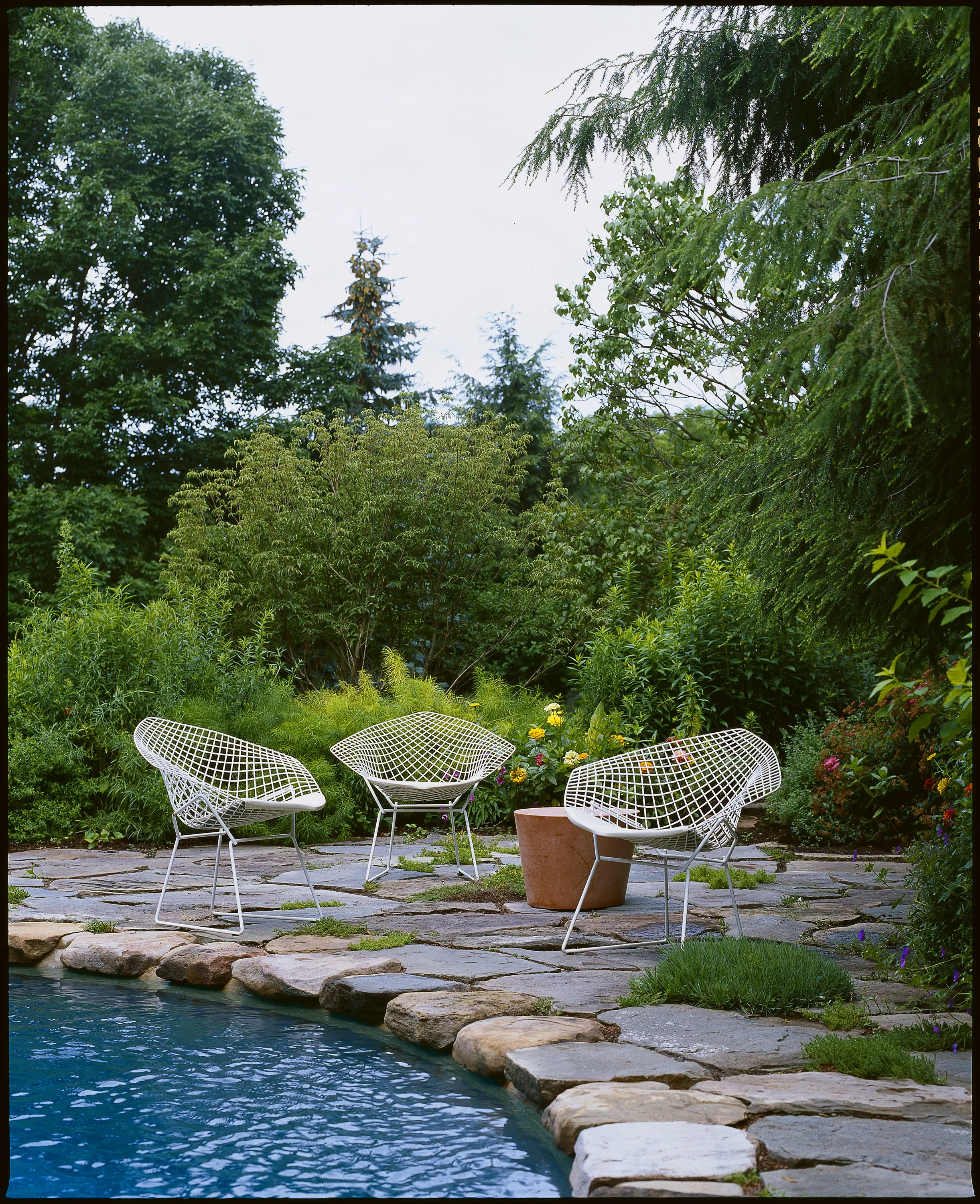
La Sedia Bertoia nella versione outdoor ha la struttura in tondino d’acciaio saldato e finitura Rilsan in bianco o nero, mentre la poltroncina e la poltrona Asimmetrica sono proposte solo nel colore bianco.
Si aggiunge alla collezione anche la Panca Bertoia con struttura in acciaio inossidabile, Rilsan nero e bianco con i listoni realizzati in pietra acrilica o in Teck.
Questo prodotto dalle linee semplici è stato il primo disegnato da Harry Bertoia per Knoll. Nonostante non sia ancora caratterizzato dalla griglia, la base metallica saldata della Panca mostra già l’esplorazione del materiale e anticipa quello che poi darà vita alle sedute firmate dallo stesso Bertoia per Knoll.
Questo prodotto appartiene alla collezione:
Base metallo, Cuoio, Metallo, Seduta cuoio

United States
Harry Bertoia was an Italian-American artist, sculptor and contemporary furniture designer. His most famous piece is his Diamond Chair. Harry Bertoia biography Harry Bertoia was born in San Lorenzo, Italy, on 10 March 1915. Following a visit to his brother in the USA, he decided to emigrate, too, at the age of 15. He studied art and design at the Cass Technical High School, and explored jewellery design and painting. In 1936, Bertoia attended the Art School of the Detroit Society of Arts and Crafts, later renamed the College for Creative Studies. Shortly afterwards, he won a scholarship to study at the Cranbrook Academy of Art, where he met Walter Gropius as well as Charles and Ray Eames. In 1943, he moved to California, where he worked in the Eames office until 1946. In the 1950s, Bertoia teamed up with Florence Knoll, a fellow Cranbrook Academy graduate, who had a studio in Pennsylvania. It is here that he made his name by developing his steel-wire chairs – the Bertoia Collection – the Diamond Chair chief among them. Steel wire also formed the basis of his Bertoia 1055 sculpture, designed for Eero Saarinen’s MIT Chapel. From 1953 onwards, Bertoia focused solely on sculpture and goldsmithing. Diamond Chair Harry Bertoia developed the Diamond Chair from 1952 to 1953 for Knoll Associates in New York. He was interested in how steel rod could be used to create highly sculptural and fluid, and at the same time functional, forms. His Diamond Chairs, as Bertoia himself put it, are mostly made of air. ‘Space passes right through them.’ Still being manufactured by Knoll today, the sculptural form of the Diamond Chair is emblematic of the pared-down 1950s interior. Bird Chair The Bird Lounge Chair, designed by Harry Bertoia in 1952, results from his experiments in wire mesh. The organic form of the seat’s shell represents the culmination in his wire-frame furniture series for Knoll. The Bird Lounge Chair is a high-back variation on the Diamond Chair. © by Architonic


