Share


1/9


float | teaware
About this product
Architonic ID: 1069031
Year of Launch: 2004
float | teaware
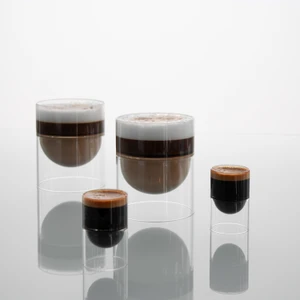
float is a line of thermally resistant glassware with simple forms and clean lines that emphasize the expressive colours and charms of the tea, spirits and other liquids within. The glassware is handcrafted by master glassblowers in the Czech Republic from the finest borosilicate glass, an extremely pure and chemically inert material that is resistant to thermal shock. This allows float to be used safely with boiling hot or icy cold liquids.
The suspended bowl creates a lens of liquid colour, projecting hues of light onto the table below, and insulates your hands from your beverage. When used for a chilled drink, beads of condensation will gather on the underbelly of the bowl, adding delicacy to the optical effect rather than making rings on the tabletop.
float tea lantern, the collection’s signature piece, is a tea pot named for the quality of light transmitted through the tea by the warming candle. The lantern is made with a double glass wall, enclosing a vacuum to provide thermal insulation. The insulated wall allows for the simple form of a cylinder without a handle—simply hold and pour the way you would a wine bottle.
Design by Stephanie Forsythe and Todd MacAllen
available products:
float tea lantern | double walled tea pot
This teapot takes its name from the light transmitted through the tea by the warming candle. float tea lantern is made with a double glass wall, which encloses a vacuum to provide thermal insulation for hot or cold beverages. The insulated wall allows for the clean form of a cylinder without a handle—simply hold and pour the way you would a wine bottle.
The tealight candle burning below the lantern keeps tea hot for hours and emits warm, ambient light as it passes through the suspended tea. The colour, fragrance, and warmth of the tea create a wonderful sensory experience.
The original float tea lantern was designed in 2001 as part of a study to create simple and beautiful objects from a sole material. Inspiration for the tea lantern came from the idea that a small everyday object could define an intimate place of gathering or contemplation through qualities of light, warmth, aroma, and taste. Master glassblowers in the Czech Republic handcraft each piece from the finest German borosilicate glass. This extremely pure and chemically inert material is resistant to thermal shock, allowing float to be safely used with both hot and cold liquids.
product dimensions:
small tea lantern · 10.2 inches (260 millimeters) tall x 3.2-inch (80-millimeter) diameter large tea lantern · 13 inches (330 millimeters) tall x 3.8-inch (95-millimeter) diameter
float tea cup | double walled glassware
From the float glassware collection, this little tea cup is a perfect size for tea, scotch, white wine, juice, or coffee. The suspended bowl performs the practical function of insulating hand from beverage and casts a colourful pattern of refracted light. When used for a chilled drink, small beads of condensation accumulate on the underbelly of the bowl, adding delicate beauty to the optical effect rather than making rings on the tabletop. Each piece of float glassware is handcrafted by master glassblowers in the Czech Republic from the finest German borosilicate glass. This extremely pure and chemically inert material is resistant to thermal shock, allowing all float glassware to be used safely with both hot and cold liquids.
sold in sets of two
7.5 fluid ounces (220 milliliters) 3.2 inches (80 millimeters) tall x 3.2-inch (80-millimeter) diameter
float sugar + cream | double walled glassware
The sugar + cream set was designed to accompany float tea lantern and tea cups. The large set includes one sugar bowl with a lid and one creamer with a delicate spout. The small set is a more personal serving size; a matching pair of vessels with spouts for pouring milk, honey, cream, sugar, or syrup. Both sizes are versatile for serving sauces and the small set is perfect for measuring out cocktails. Each piece of float glassware is handcrafted by master glassblowers in the Czech Republic from the finest German borosilicate glass. This extremely pure and chemically inert material is resistant to thermal shock, allowing all float glassware to be used safely with both hot and cold liquids.
sold in sets of two pieces
product dimensions:
small sugar + cream · 2.7 inches (68 millimeters) tall x 1.7-inch (44-millimeter) diameter sugar + cream · 3.2 inches (80 millimeters) tall x 3.2-inch (80-millimeter) diameter
float matcha bowl | double walled glassware
Inspired by the ritual beauty of the Japanese tea ceremony, float matcha bowl is made in dimensions that accommodate the traditional bamboo whisk used to froth the tea. The bowl doubles as a planter for live orchids and as a serving dish for desserts or soups.
Each piece of float glassware is handcrafted by master glassblowers in the Czech Republic from the finest German borosilicate glass. This extremely pure and chemically inert material is resistant to thermal shock, allowing all float glassware to be used safely with both hot and cold liquids.
sold in sets of one
16 fluid ounces (470 milliliters) 3.8 inches (95 millimeters) tall x 4.3-inch (110-millimeter) diameter
This product belongs to collection:

Specifications
Material
Glass
Textile
Borosilicate glass
Design files
26
Designers

Stephanie Forsythe
Canada
Stephanie Forsythe and Todd MacAllen cofounded molo in 2003 and are best known for sharing their ideas and products for flexible, sustainable spacemaking around the world. Over the past three decades, the partners have worked together and led the Vancouver-based studio from humble beginnings to international recognition and acclaim. Along the way, they have assembled a dedicated team and a family of specialized manufacturers that support them in this endeavour. The partners work together to design all of molo’s products and projects, which range in size from a tea set to a museum. Forsythe and MacAllen met in 1994 while studying Architecture at Dalhousie University. Between 1994 and 2003, they worked together on several award-winning architectural projects and competition proposals. These projects included foundational investigations into materials, flexibility, and sustainable space making. The partners built molo around these early explorations and ideas, and they continue to drive the spirit behind the studio. Together, they designed and developed the iconic soft collection, a sculptural line of innovative, flexible space partitions, furniture, and lighting elements made from paper and textile. The award-winning soft collection is well known for its poetic beauty and pragmatic design. It experiences steady, iterative development as Stephanie Forsythe and Todd MacAllen continue their experiential and technical investigations, or as a sensitivity to nature and how the products interact with light and shadow inspires new finishes or colours. Stephanie Forsythe, Todd MacAllen, and molo hold over thirty-five patents and thirty design registrations. They have received numerous international design and architecture awards, including the prestigious Danish INDEX Award for Design to Improve Life for softwall, the Architectural Review AR + D Award for Colorado House, 2010 Emerging Voices Award from The Architectural League of New York and Grand Prize in the Aomori Northern Housing Competition. Their products have been acquired by many museum and gallery collections, including the New York Museum of Modern Art (MoMA), the Chicago Art Institute, Die Neue Sammlung, and the Cooper Hewitt Smithsonian Design Museum.

Todd MacAllen
Canada
Stephanie Forsythe and Todd MacAllen cofounded molo in 2003 and are best known for sharing their ideas and products for flexible, sustainable spacemaking around the world. Over the past three decades, the partners have worked together and led the Vancouver-based studio from humble beginnings to international recognition and acclaim. Along the way, they have assembled a dedicated team and a family of specialized manufacturers that support them in this endeavour. The partners work together to design all of molo’s products and projects, which range in size from a tea set to a museum. Forsythe and MacAllen met in 1994 while studying Architecture at Dalhousie University. Between 1994 and 2003, they worked together on several award-winning architectural projects and competition proposals. These projects included foundational investigations into materials, flexibility, and sustainable space making. The partners built molo around these early explorations and ideas, and they continue to drive the spirit behind the studio. Together, they designed and developed the iconic soft collection, a sculptural line of innovative, flexible space partitions, furniture, and lighting elements made from paper and textile. The award-winning soft collection is well known for its poetic beauty and pragmatic design. It experiences steady, iterative development as Stephanie Forsythe and Todd MacAllen continue their experiential and technical investigations, or as a sensitivity to nature and how the products interact with light and shadow inspires new finishes or colours. Stephanie Forsythe, Todd MacAllen, and molo hold over thirty-five patents and thirty design registrations. They have received numerous international design and architecture awards, including the prestigious Danish INDEX Award for Design to Improve Life for softwall, the Architectural Review AR + D Award for Colorado House, 2010 Emerging Voices Award from The Architectural League of New York and Grand Prize in the Aomori Northern Housing Competition. Their products have been acquired by many museum and gallery collections, including the New York Museum of Modern Art (MoMA), the Chicago Art Institute, Die Neue Sammlung, and the Cooper Hewitt Smithsonian Design Museum.