Share
1/4


thinwall | acoustic wall liner + cabinet enclosure
Available variants:


- Home/Wall panels/
thinwall | acoustic wall liner + cabinet enclosure
About this product
Architonic ID: 1492330
Year of Launch: 2014
brown paper thinwall | acoustic wall liner + cabinet enclosure
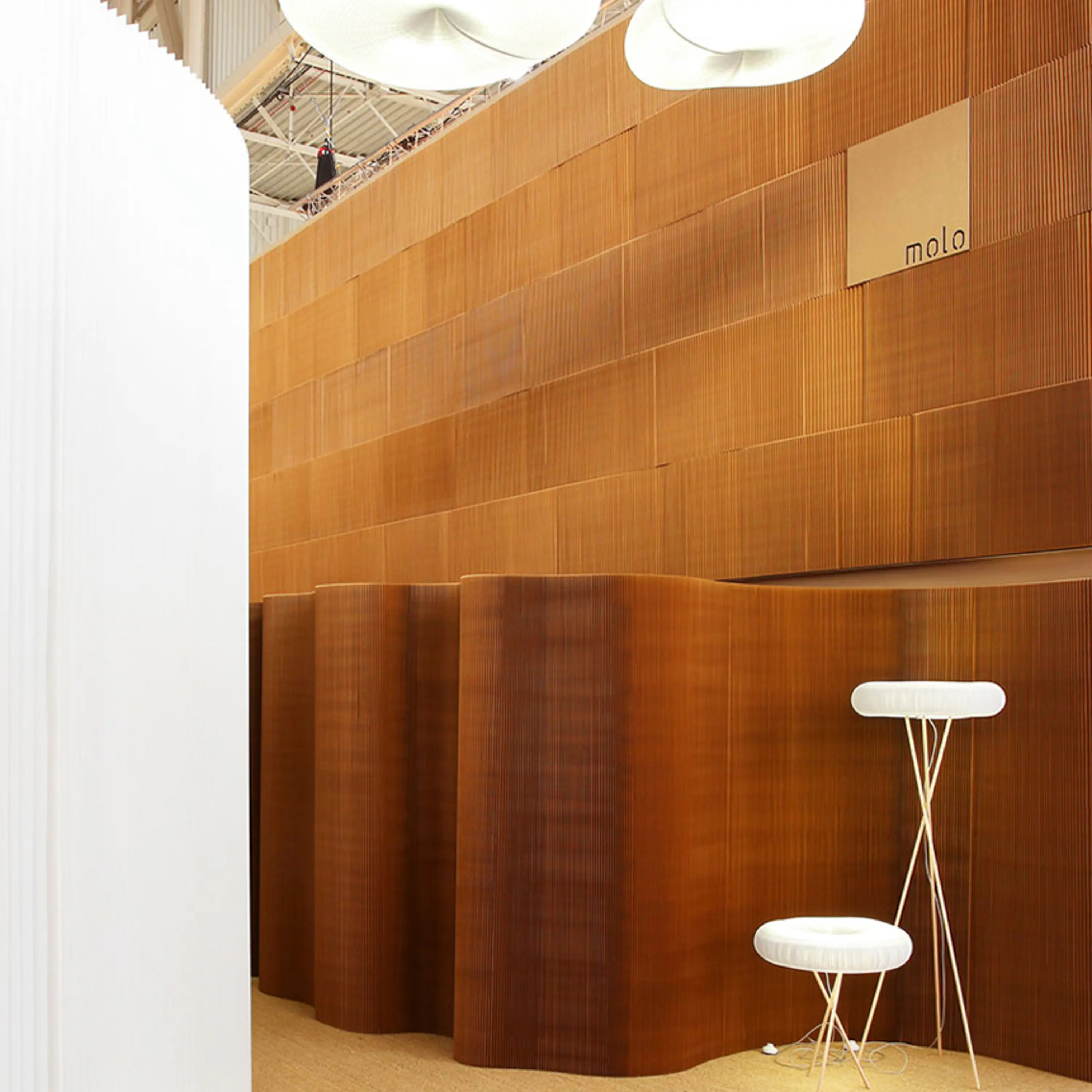
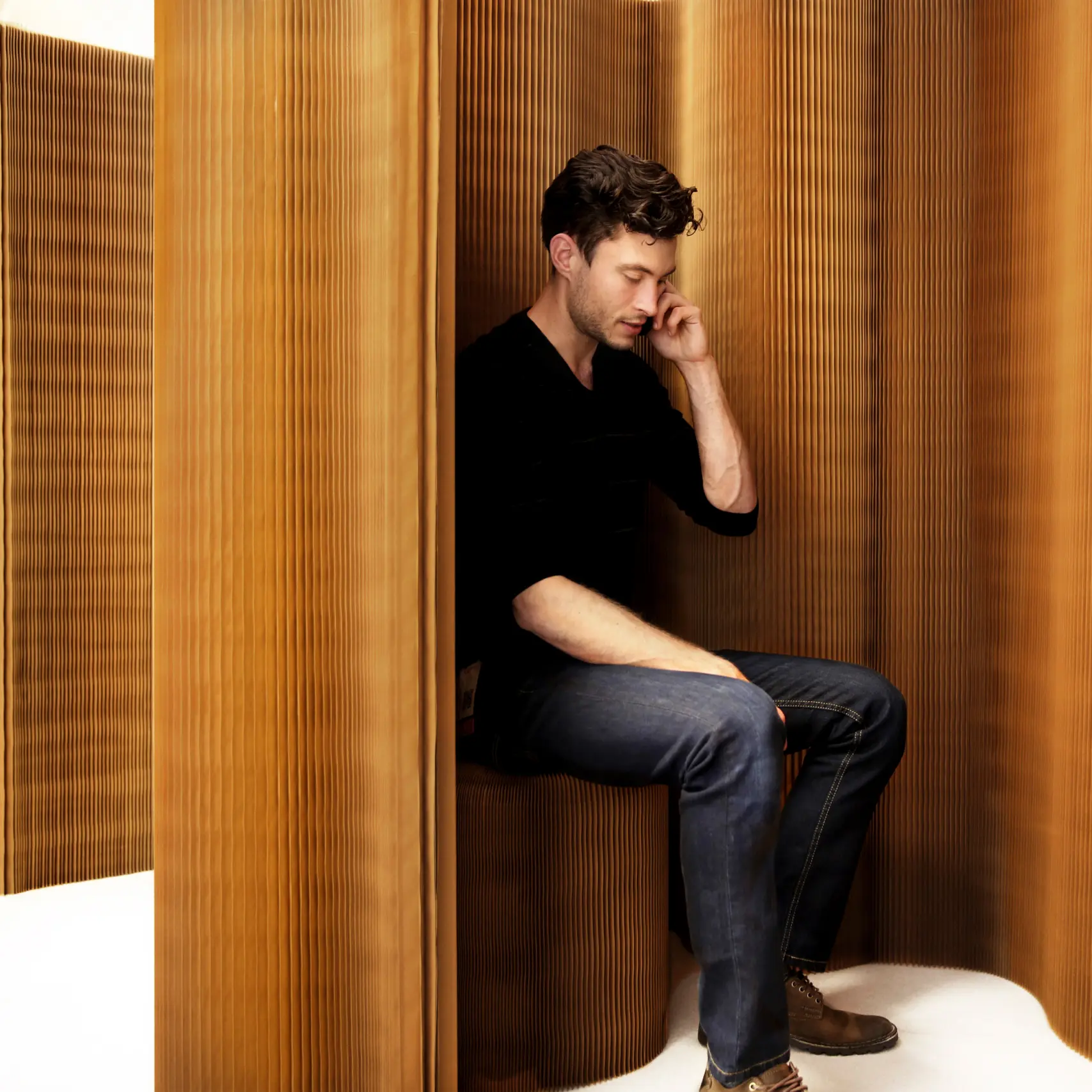
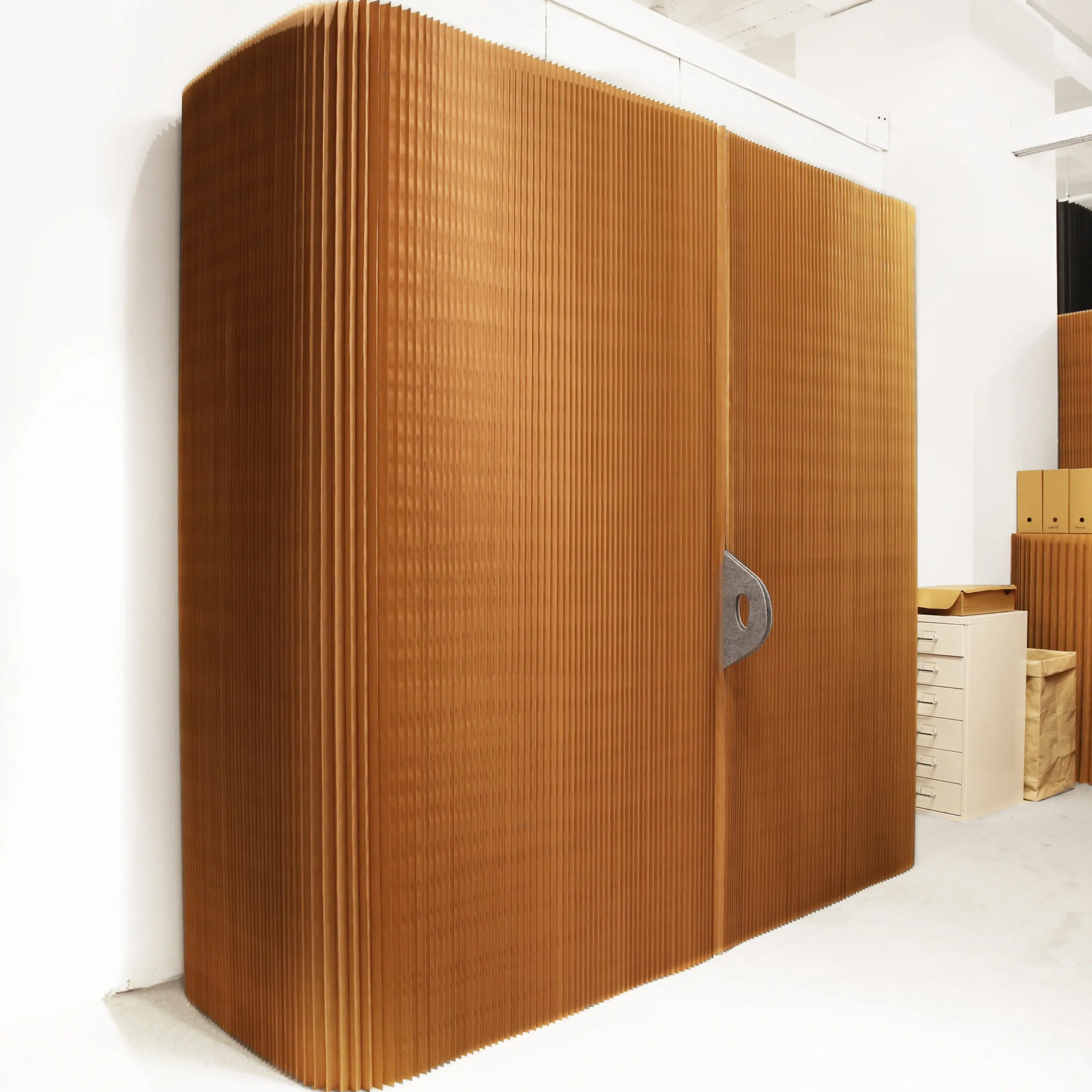
Unlike its sibling product, softwall, thinwall is not intended to be freestanding. It was designed as a sculptural acoustic wall liner for solid walls, columns, and ceilings or as a flexible wrap for storage areas, reception desks, and other millwork. The flexible wall measures only 3.5 inches (9 centimetres) wide and reaches 6 feet (1.83 meters) tall. Adjustable in length, it stretches up to 11.5 feet (3.5 meters) long.
All standard thinwalls are 6 feet (183 centimeters) tall.
Please enquire for custom height.
Design by Stephanie Forsythe and Todd MacAllen
available colours:
brown paper
black paper
blue paper
white textile
acoustics
The internal honeycomb structure and pleated surface break up reflected sound and provide acoustic absorption to enhance clarity of speech.
material
The white textile is a nonwoven polyethylene. Durable to handle and easy to maintain; it is antistatic to repel dust, washable with soap and water, UV-stable and tear resistant.
paper thinwall, available in natural brown or dyed blue, is made from wood harvested from FSC® Certified (FSC® C158591) responsible resources. Both materials are 100% recyclable.
integrated LED
The textile version can be backlit with a flexible LED ribbon to transform the space liner into a sculptural light fixture.
immersive environments
A complement to softwall rather than an alternative, thinwall integrates additional furniture or structures into an aesthetically cohesive environment.
This product belongs to collection:


Specifications
Color
Colour brown
Variants
2
You can visit the product page for these variants—just click on them!


Design files
26
Designers

Stephanie Forsythe
Canada
Stephanie Forsythe and Todd MacAllen cofounded molo in 2003 and are best known for sharing their ideas and products for flexible, sustainable spacemaking around the world. Over the past three decades, the partners have worked together and led the Vancouver-based studio from humble beginnings to international recognition and acclaim. Along the way, they have assembled a dedicated team and a family of specialized manufacturers that support them in this endeavour. The partners work together to design all of molo’s products and projects, which range in size from a tea set to a museum. Forsythe and MacAllen met in 1994 while studying Architecture at Dalhousie University. Between 1994 and 2003, they worked together on several award-winning architectural projects and competition proposals. These projects included foundational investigations into materials, flexibility, and sustainable space making. The partners built molo around these early explorations and ideas, and they continue to drive the spirit behind the studio. Together, they designed and developed the iconic soft collection, a sculptural line of innovative, flexible space partitions, furniture, and lighting elements made from paper and textile. The award-winning soft collection is well known for its poetic beauty and pragmatic design. It experiences steady, iterative development as Stephanie Forsythe and Todd MacAllen continue their experiential and technical investigations, or as a sensitivity to nature and how the products interact with light and shadow inspires new finishes or colours. Stephanie Forsythe, Todd MacAllen, and molo hold over thirty-five patents and thirty design registrations. They have received numerous international design and architecture awards, including the prestigious Danish INDEX Award for Design to Improve Life for softwall, the Architectural Review AR + D Award for Colorado House, 2010 Emerging Voices Award from The Architectural League of New York and Grand Prize in the Aomori Northern Housing Competition. Their products have been acquired by many museum and gallery collections, including the New York Museum of Modern Art (MoMA), the Chicago Art Institute, Die Neue Sammlung, and the Cooper Hewitt Smithsonian Design Museum.

Todd MacAllen
Canada
Stephanie Forsythe and Todd MacAllen cofounded molo in 2003 and are best known for sharing their ideas and products for flexible, sustainable spacemaking around the world. Over the past three decades, the partners have worked together and led the Vancouver-based studio from humble beginnings to international recognition and acclaim. Along the way, they have assembled a dedicated team and a family of specialized manufacturers that support them in this endeavour. The partners work together to design all of molo’s products and projects, which range in size from a tea set to a museum. Forsythe and MacAllen met in 1994 while studying Architecture at Dalhousie University. Between 1994 and 2003, they worked together on several award-winning architectural projects and competition proposals. These projects included foundational investigations into materials, flexibility, and sustainable space making. The partners built molo around these early explorations and ideas, and they continue to drive the spirit behind the studio. Together, they designed and developed the iconic soft collection, a sculptural line of innovative, flexible space partitions, furniture, and lighting elements made from paper and textile. The award-winning soft collection is well known for its poetic beauty and pragmatic design. It experiences steady, iterative development as Stephanie Forsythe and Todd MacAllen continue their experiential and technical investigations, or as a sensitivity to nature and how the products interact with light and shadow inspires new finishes or colours. Stephanie Forsythe, Todd MacAllen, and molo hold over thirty-five patents and thirty design registrations. They have received numerous international design and architecture awards, including the prestigious Danish INDEX Award for Design to Improve Life for softwall, the Architectural Review AR + D Award for Colorado House, 2010 Emerging Voices Award from The Architectural League of New York and Grand Prize in the Aomori Northern Housing Competition. Their products have been acquired by many museum and gallery collections, including the New York Museum of Modern Art (MoMA), the Chicago Art Institute, Die Neue Sammlung, and the Cooper Hewitt Smithsonian Design Museum.

